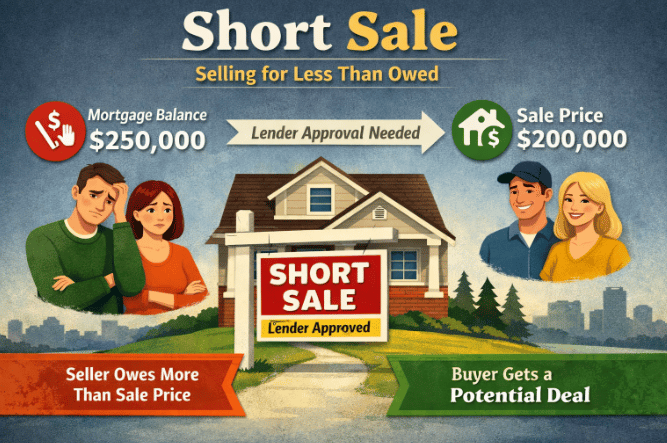
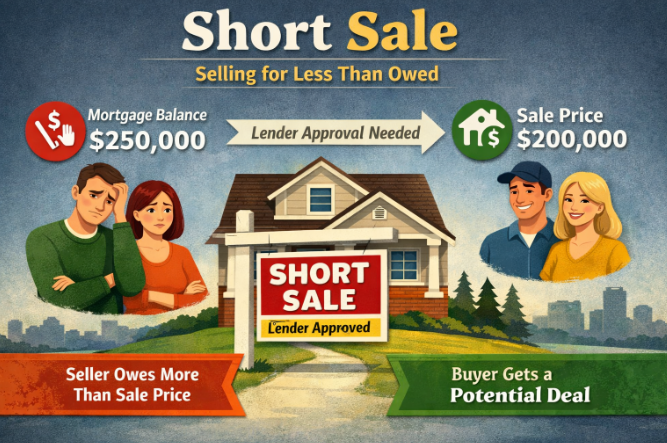
A short sale is a real estate transaction where a homeowner sells their property for less than the amount still owed on the mortgage, and the lender agrees to accept the reduced payoff.
-
A homeowner owes $550,000 on their mortgage
-
The home’s market value is now $500,000
-
The lender agrees to allow the sale at the lower amount
The lender is essentially accepting the sale “short” of the full loan balance—hence the term short sale.
Why Do Short Sales Happen?
Short sales are usually tied to financial hardship. Common reasons include:
For some homeowners, a short sale may be an alternative to foreclosure and can provide an opportunity to move forward financially with less long-term impact.
How Does a Short Sale Work?
Unlike a traditional home sale, a short sale requires approval from the seller’s mortgage lender.
-
The seller receives an offer from a buyer
-
The lender reviews the seller’s financial situation
-
The lender decides whether to approve the sale price
Because lenders are involved in the decision-making process, short sales typically take longer than traditional transactions.
What Buyers Should Know About Short Sales
For buyers in Central Oregon, short sales can sometimes offer value opportunities—but they also require patience and flexibility.
-
Competitive purchase prices
-
Less buyer competition in some cases
-
Opportunity in desirable neighborhoods
-
Longer timelines
-
Delayed lender responses
-
Additional paperwork
-
Homes often sold “as-is”
Working with an experienced real estate agent is especially important when navigating a short sale purchase.
Short Sale vs. Foreclosure: What’s the Difference?
These terms are often confused, but they’re very different.
-
Homeowner voluntarily sells the property
-
Lender agrees to accept less than owed
-
Typically less damaging to credit than foreclosure
-
Lender takes legal ownership of the home
-
Property is repossessed due to missed payments
-
Greater long-term credit impact
A short sale is often viewed as a proactive step before foreclosure occurs.
A short sale is when a lender allows a home to sell for less than the remaining mortgage balance, often helping homeowners avoid foreclosure during financial hardship.
For buyers, short sales may present unique opportunities, but they require patience, lender approval, and experienced guidance throughout the process.
Whether you’re buying, selling, or simply trying to better understand today’s market, knowing how short sales work can help you make more informed real estate decisions.